Real Faults vs False Alarms: The Nuisance Trip Hunt
A BESS commissioning checklist only works if it’s grounded in real site conditions, not just factory settings. The areas that most often go wrong are nuisance trips, insulation monitoring, OEM communication, and SCADA integration.
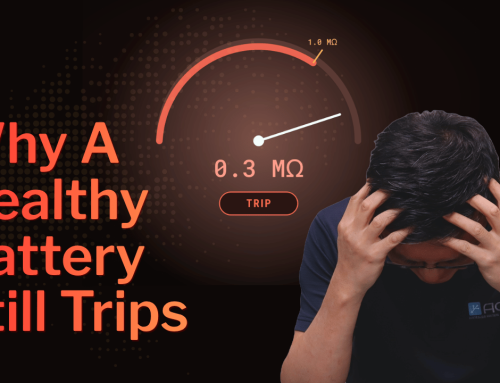
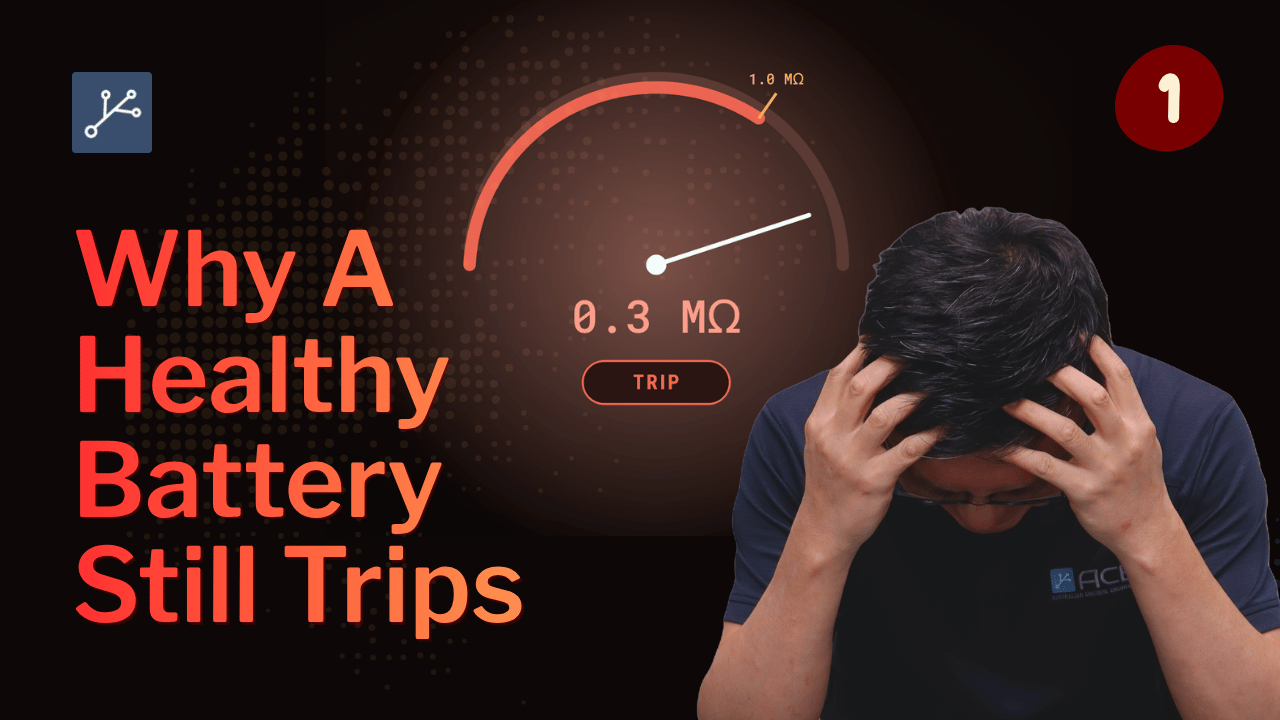
Nuisance trips, also known as battery energy storage system false trips, are the biggest source of lost commissioning days. They happen when protection thresholds, pre-charge current limits, cooling fan cutoffs, sensor watchdog timers, are tuned for factory-test conditions rather than the real site. The fix is to review trip logs, understand the physics behind each setting, and get changes verified by the OEM under formal change control. Catching these early is how you get ahead of battery energy storage system false trips before they cost you days on site. That’s the backbone of a proper BESS commissioning process.
Insulation monitoring gets skipped just as often. Without early insulation resistance testing, faults surface later, when they’re harder and more expensive to trace. Insulation monitoring belongs on the checklist from day one, not after something fails.
Most BESS equipment comes from overseas OEMs, so a fast, documented communication line matters once the plant is down. Formalising that interface, instead of relying on informal chat, is often what separates a one-day fix from a three-week standstill.
SCADA and EMS integration comes next. A small, poorly configured SCADA package can put an entire grid connection at risk, so it needs the same scrutiny as everything else on the BESS commissioning checklist.
At ACE, we run commissioning as a full BESS commissioning process, not a box-ticking exercise.
Contact Us
At ACE, we like to engage early with our clients so we can help you avoid costly grid connection delays down the track.
Call us: 1-300-561-881
Visit: acectrl.com/contact-us
Email: sales@acectrl.com